Netflix Strategy: Why 'Older' Content Is Actually a Smart Business Decision
The leadership team at Netflix had a concern: the content in the US catalog seemed to be getting “older.” Between 2015 and 2021, the amount of brand-new content fell from 72% to just 28%. At first glance, this looked like a failure to keep the platform fresh.
However, after looking closer at the data, we discovered that this wasn’t a mistake—it was a deliberate business move.
The Hidden Truth in the Numbers
When we look at the big picture, the numbers can be misleading. To understand what was really happening, we had to split the data into two main groups: TV Shows and Movies.
The results showed two completely different stories:
- TV Shows are getting fresher: The number of new shows added to Netflix actually increased by 21% (from 40% to 61% fresh content).
- Movies are getting older: Netflix has intentionally started adding more “classic” or older movies to build a deep library.
Because there are many more movies than TV shows in the catalog, the “older movies” trend made the whole platform look like it was failing, even though TV shows were performing better than ever.
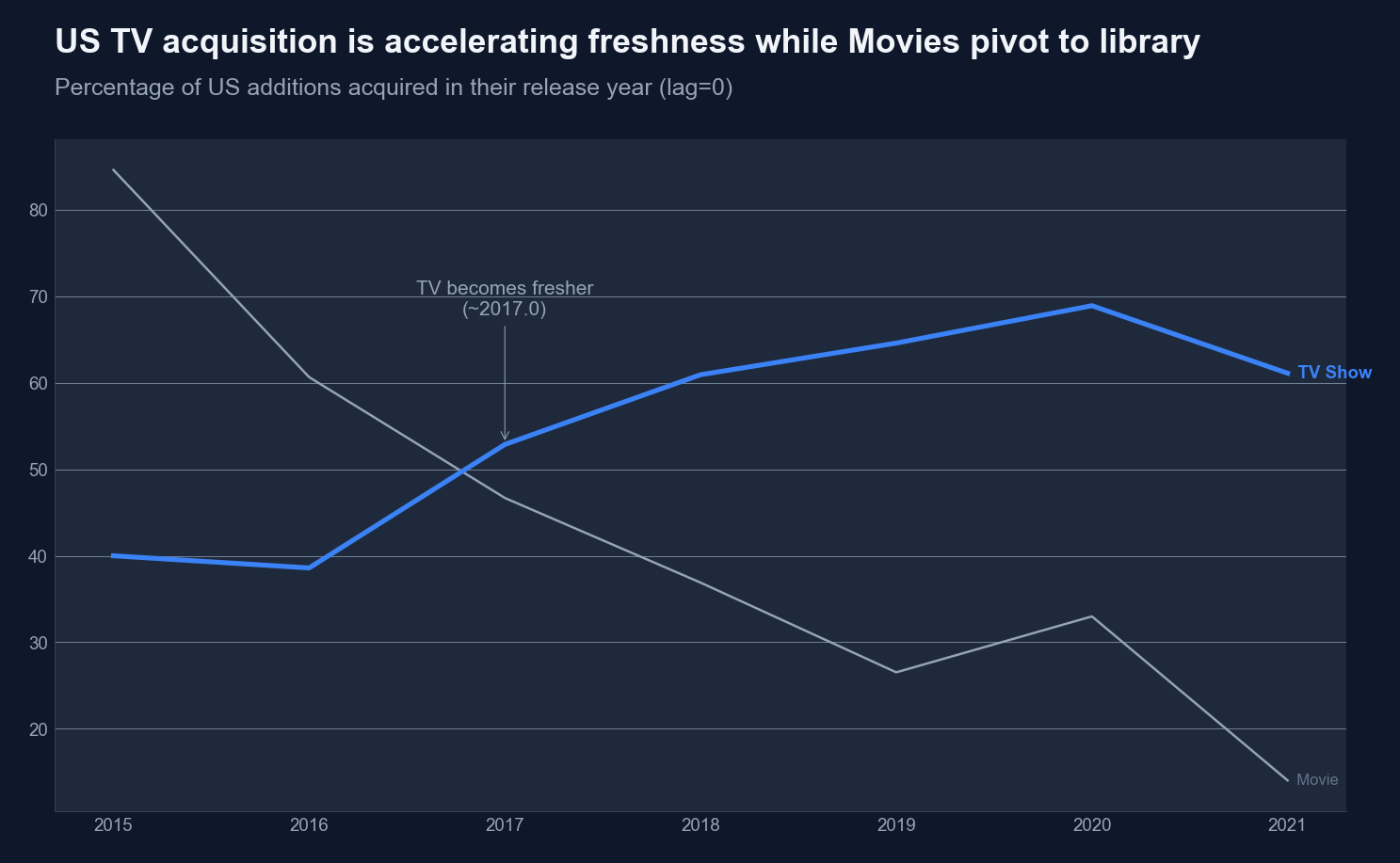
The Business Lesson: Tracking everything with one single number can hide the truth. You need different goals for different types of products.
Targeted Growth in Specific Areas
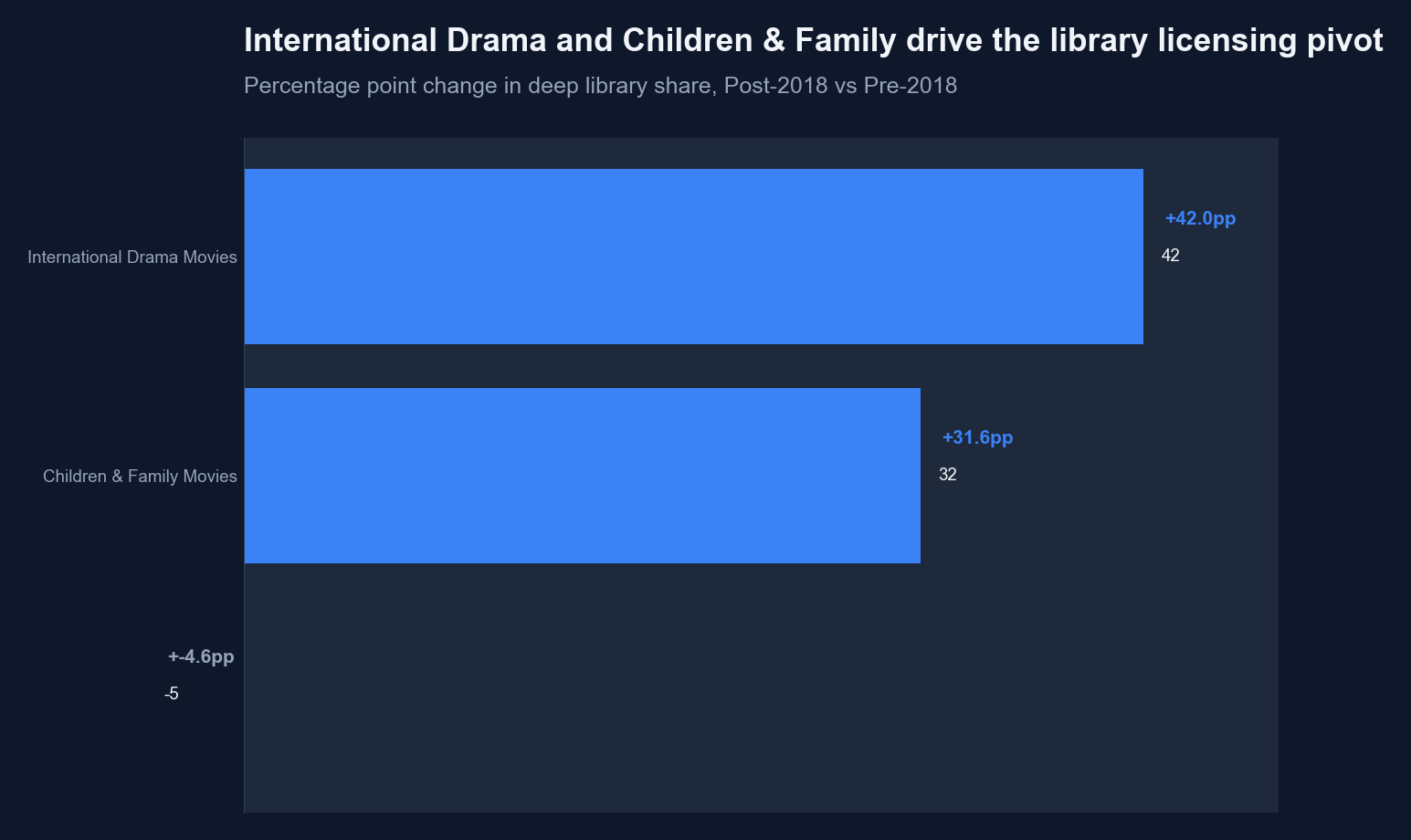
The shift toward older content isn’t happening everywhere. By grouping titles into categories, we found that Netflix is focusing its “library-building” strategy on two specific areas:
- International Dramas: Older titles in this category jumped from 6% to 47%.
- Family & Kids Movies: Older titles here grew from 16% to 48%.
This shows that Netflix is being very specific about where they want to own “classic” content versus where they want “brand-new” content.
The Partnership Problem with Documentaries
We also looked at how often Netflix works with the same directors. Working with the same people usually makes business faster and cheaper.
- In Family Content, Netflix has strong, repeat partnerships.
- In Documentaries, almost every project is with a new director.
This means every documentary requires a new contract, new negotiations, and new relationships from scratch. This is a missed opportunity for better efficiency and lower costs.
The Quality Risk: Missing Information
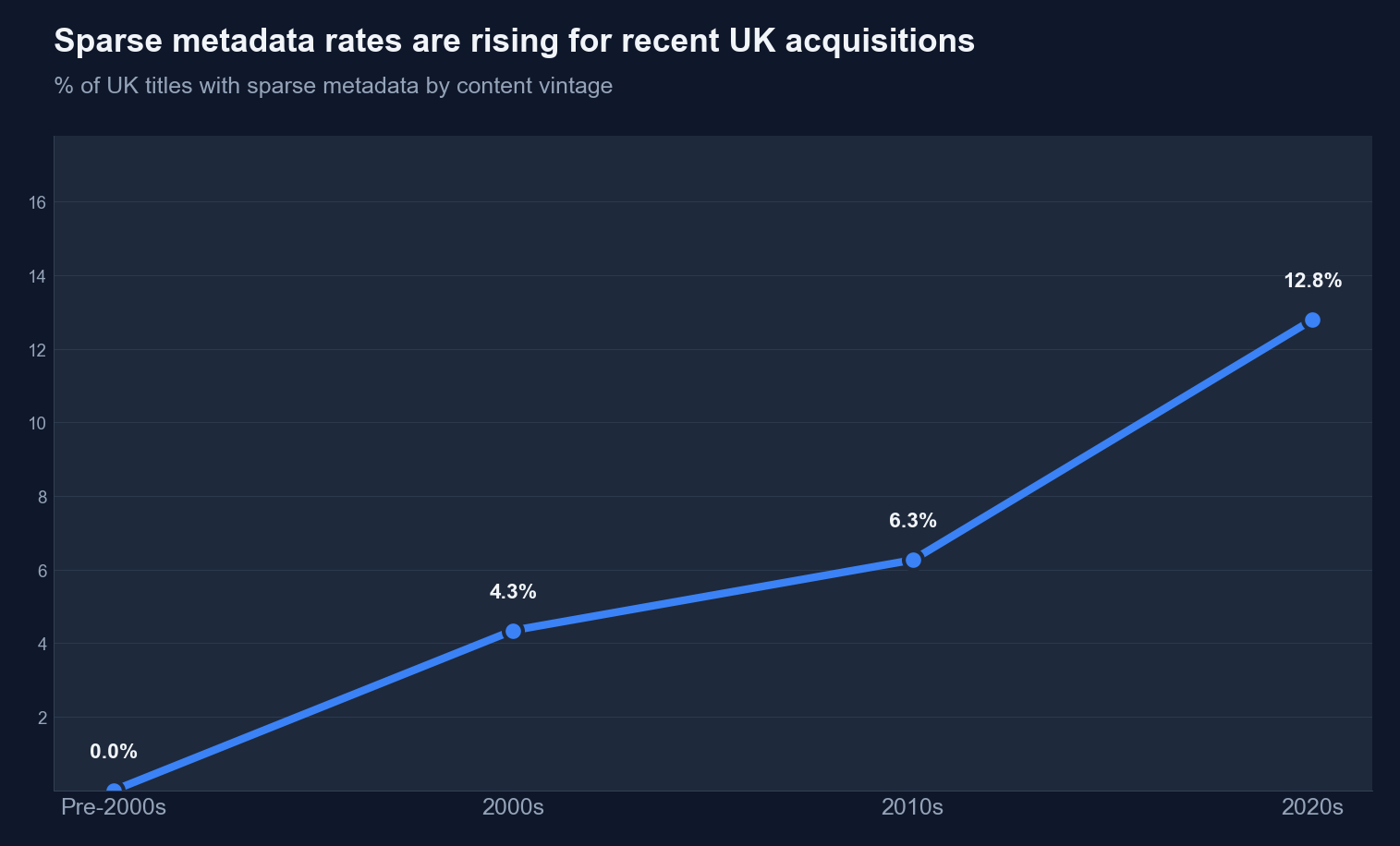
A real problem we found is in the UK catalog. For content added in the 2020s, about 13% of the titles are missing important information (like descriptions or tags).
Surprisingly, older content has much better information than the new content. This isn’t just a backlog of work; it’s a failure in how new content is added to the system. Missing information makes it harder for users to find what they want to watch.
Three Recommendations for the Future
To keep growing successfully, Netflix should focus on these three business goals:
- Use Separate Metrics: Stop tracking “freshness” as one number. Create one goal for new TV shows and a different goal for the movie library.
- Fix the Data Pipeline: Ensure that every new title has complete information before it goes live. This is especially important for the UK market.
- Build Long-Term Partnerships: Create “first-look” deals with documentary directors to save time and money on negotiations.
Final Thought
Netflix isn’t “getting old” by accident. It is building a powerful library of movies while keeping its TV shows fresh. The real risk isn’t the strategy—it’s how we measure it and how we manage the details like data quality and partner relationships.
Code & Data: View the analysis scripts here