Service Metrics: Separating Queue Pressure from Resolution Quality
In brief
A service-operations metric layer that keeps arrivals, backlog age, administrative closure, and resolution quality from being treated as the same outcome.
Business question
Where should response capacity move when a queue has many requests but the public data cannot directly measure resident outcomes?
Why it matters
Counting requests alone can send staff to the busiest queue while older work remains elsewhere. Treating a closed record as a resolved issue can also make a faster administrative process look like better service.
Decision brief
- Recommendation: use a queue-level metric layer with arrivals, open backlog, age, close-time distribution, and workflow mix before changing staffing or routing.
- Evidence: NYC 311 provides request IDs, creation and closure timestamps, status, agency, type, and location. The source does not provide consistent first-response time, staff hours, or resolution quality.
- Business value: decision-makers can see which workload signal is observed and which outcome still needs instrumentation.
- Main risk: reporting behavior and agency closure rules vary, so volume is not a complete measure of resident need.
- Next action: pilot a capacity or routing change in one queue and measure backlog age, first response, reopen/follow-up, and resident outcome guardrails where available.
What the data represents
The source is the NYC 311 Service Requests dataset. The source grain is one service request. The current case uses the request lifecycle as an operational record, not as proof that the underlying issue was fixed.
Analytics architecture
311 request source → typed request staging → queue metrics → capacity decision view
The model retains requests without a close date as open work at the cutoff. It does not silently replace missing dates with an average or remove long-running requests because they look unusual.
What I checked first
- Are request IDs unique?
- Are close dates before creation dates?
- How much work is still open at the cutoff?
- Do service times differ by complaint type and agency?
- Which outcome fields are not present and therefore need a separate product or service measurement plan?
What the evidence shows
A large source needs queue-level metrics, not only totals
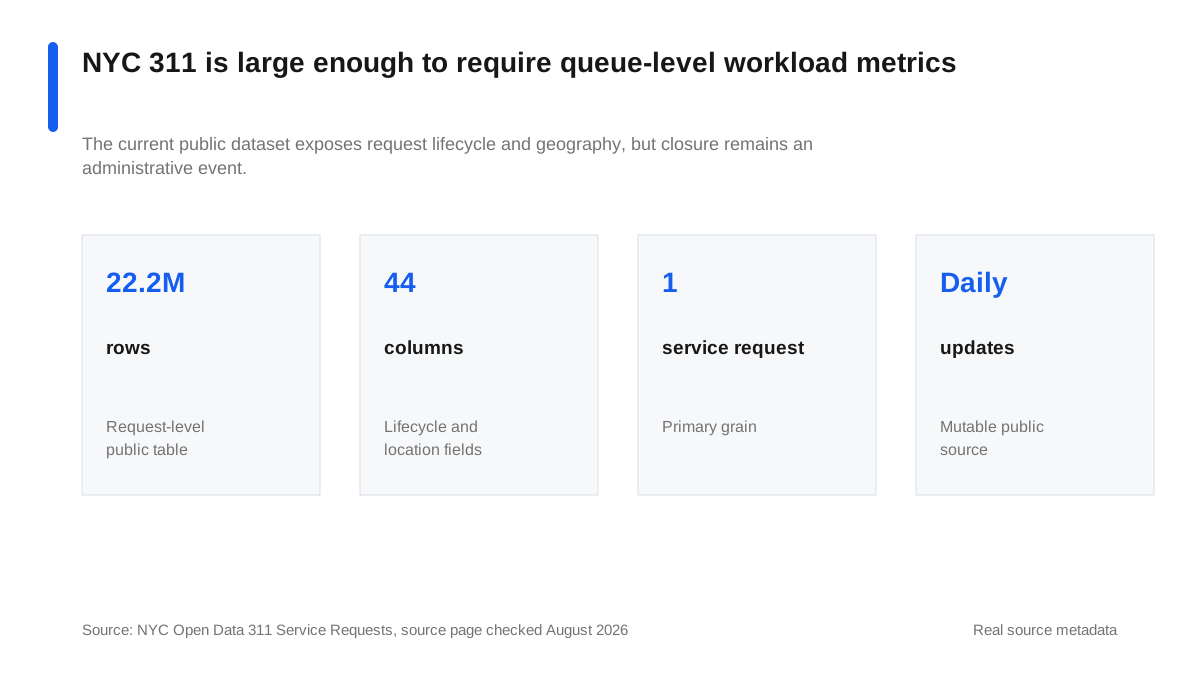 Chart takeaway: NYC 311 source scale and one-request grain
The dataset is large and mutable. A reliable analysis therefore needs a fixed cutoff, a recorded retrieval date, and a clear request grain.
Administrative closure is not the same as resolution
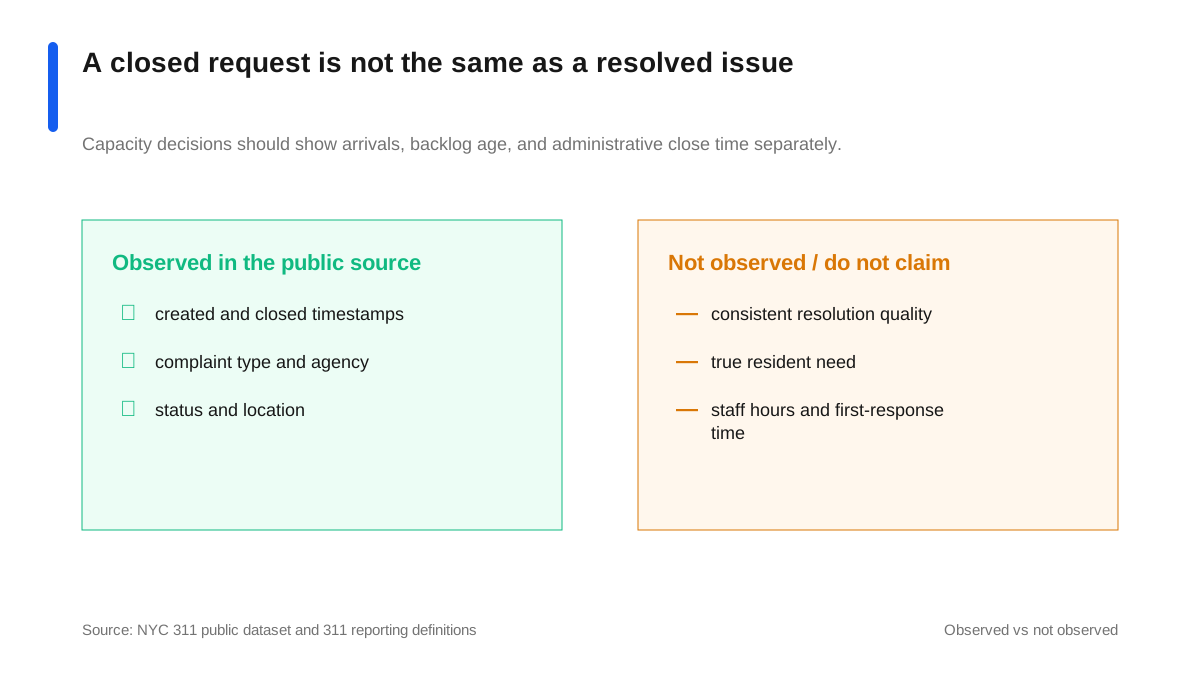 Chart takeaway: NYC 311 observed lifecycle fields and unavailable service outcomes
Close time is a process measure. It can support queue monitoring, but it should not be labeled as resident satisfaction or issue resolution without another source.
The metric contract makes the evidence boundary visible
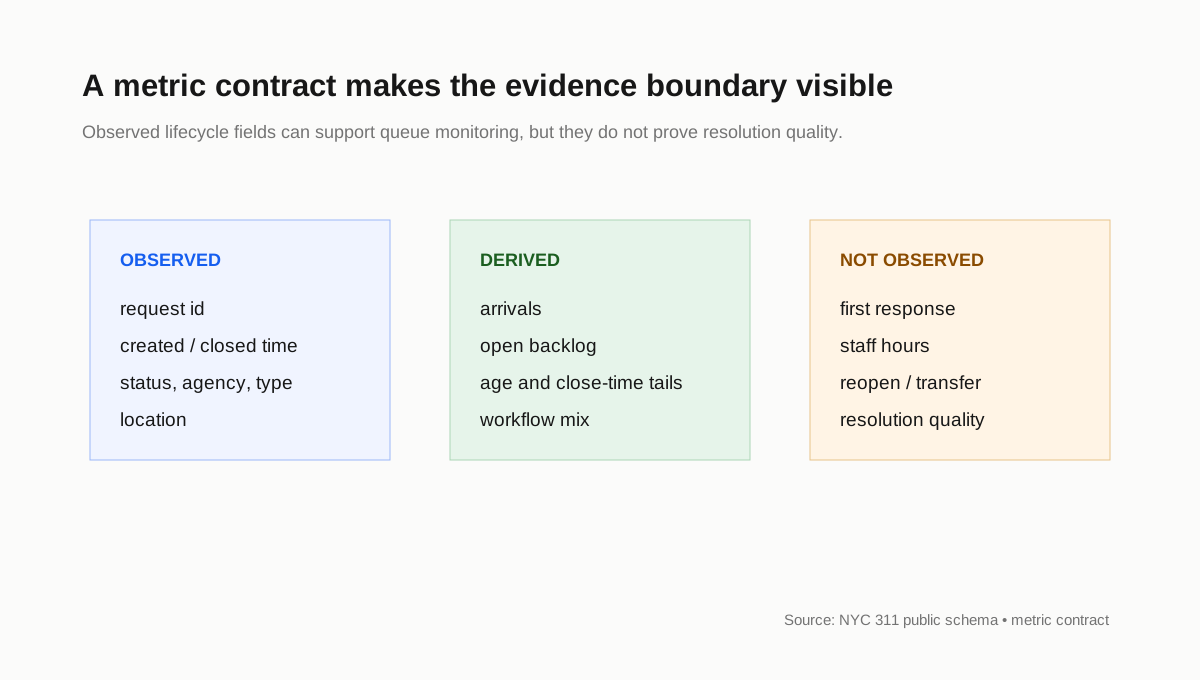 Chart takeaway: NYC 311 metric contract separating observed lifecycle measures from unavailable outcomes
This separation helps a team act on what it knows while creating a clear request for better instrumentation.
Recommendation
What: publish arrivals, open-work count, backlog age, median and tail close time, and workflow mix as separate metrics.
Where / who: start with the queue that has the oldest actionable work, not automatically the borough with the largest count.
Why: workload pressure depends on age and service-time shape as well as volume.
Risk: faster closure may move work downstream or reduce resolution quality.
Next test: compare a pilot queue with a matched queue using first response, backlog age, reopen/follow-up, and resident-outcome guardrails.
Measurement plan
Monitor source freshness, request-key uniqueness, missing close-date share, negative durations, age percentiles, and metric reconciliation. With internal service data, add first response, staff hours, transfer history, reopen events, and a consistent resolution outcome.
Key takeaway
Reliable operational analytics starts by separating workload from outcome. A queue can be measured honestly today while the missing service signals become an explicit instrumentation plan.
Read technical details
Technical appendix
The case keeps the public source and its mutable-data boundary explicit. No request-level records are copied into the website. The evidence manifest records the source, grain, checks, and decision boundary.